Are You Building Drivers or Just Babysitting Doers?
Are You Building Drivers or Just Babysitting Doers?
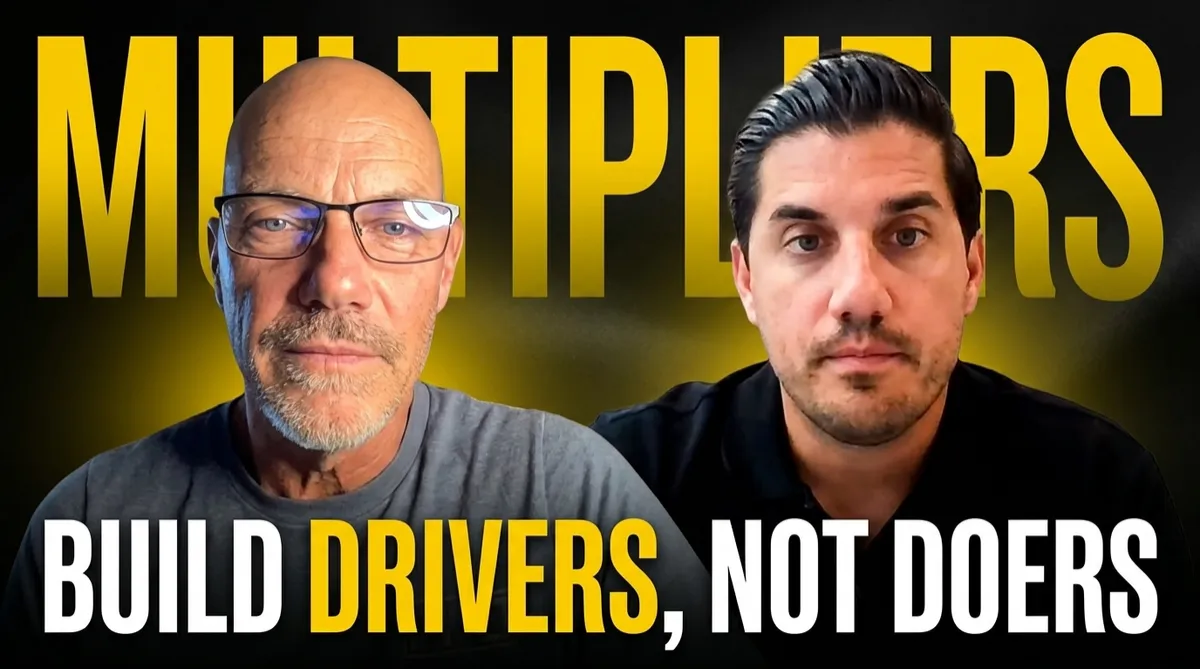
Every restaurant leader has felt this frustration: you tell people what to do, and somehow you still end up doing it yourself. On this episode of the Ride or Die Restaurant Show, Greg Provance and Spiro Douvris break down why that keeps happening, and it isn't because your team doesn't care. It's because most organizations only ever develop two types of people, and the third type, the one that actually fixes things for good, almost never gets built on purpose.
What's the real difference between a task-taker, a problem-solver, and a driver?
Greg lays out the framework plainly. Task-takers do what they're told and check the box, "you give them a list, you say, hey, clean this on a regular basis, do this, prep that, whatever it is, and they do it." Problem-solvers go further, they spot an issue and fix it, which is exactly why most people get promoted into management in the first place. But drivers, the multipliers, operate differently: "when they see a problem, especially something that's repetitive, they create a system or process that eliminates that problem forever." It's strategic instead of tactical, and it's the role almost every restaurant is short on.
What is the "martyr trap," and why does it quietly kill your team's growth?
The trap most owners and managers fall into without realizing it: swooping back in to redo someone's work because it wasn't exactly how they'd have done it. Greg names the cost directly: "what we're doing is we're stifling those leaders. We're not allowing them the opportunity to make the mistakes that they need to make to get to where they need to be." The fix isn't lowering your standards, it's accepting that getting roughly 80% of what you'd consider perfect, done by someone else, is actually a win, because the remaining 20% is where real ownership and growth happen.
Why should "if I have to ask, you're already too late" be the standard for every manager?
Spiro and Greg get specific about reporting cadence. If a leader has to go digging for the answer, chasing someone down to explain why labor spiked or why a problem happened, the relationship has already failed. The fix is an agreed-upon rhythm of communication where team members report in proactively on their own numbers, so by the time a leader sees the number, there's already context behind it. As Greg puts it, "if somebody comes to me... hey, dude, labor's gonna be high tonight when you see it, because we had two people training and one person called out, we're adjusting, this is what we're doing," there's nothing left to chase.
What should an actual weekly leadership meeting look like?
Not a daily huddle about who cleaned what. Greg runs a structured, GM-led meeting with a real agenda built around the numbers everyone is accountable to, food cost, labor, sales, growth, where each department head brings their own report instead of being interrogated for it. "I don't want to be chasing them around," Greg explains, "so I want them to be thinking and looking at the things I need them to be looking at all week long." The real purpose, as Spiro sums it up, is alignment: "we're all speaking the same language, we're all aligned with the same mission and vision."
What happens when you take your most relied-on person out of the equation?
Spiro shares the story that makes the whole framework click. Early in his career, a manager pulled the one crew chief everyone depended on to save them, Alberto, off the line during a rush. Forced to perform without their safety net, the rest of the team locked in, and their confidence grew from there. "I don't always need Alberto to come and help me," is the exact realization Spiro says the team had. The lesson: the difference isn't how talented your best person is. It's whether everyone else is allowed to grow without them.
What's the "hot shot rule," and why does staying sharp require it?
Greg points to former Cinnabon CEO Kat Cole's practice of constantly asking herself: if another CEO came in to take my job tomorrow, what would they look at first? What would they do differently? It's a deliberate way of staying honest about blind spots that build up the longer you run the same operation. Spiro ties it back to coaching and leadership turnover in general: "you see it with sports teams and coaches, you see it with these big corporations' CEOs. They only have a certain tenure because they know the message gets stale."
More from the Rundown: for more on building a team you don't have to babysit, see Stop Hiring Bodies, Start Hiring Believers, Stop Orientating, Start Integrating, and You're Hiring to Fill a Shift, Not Build a Company.
Turning task-takers and problem-solvers into real drivers, people who think like owners and build systems instead of just fighting fires, is exactly what we help restaurant leadership teams install inside the Leadership Circle. If this conversation resonated, learn more about the Leadership Circle here.
Want more conversations like this one? Subscribe to the Ride or Die Restaurant Show and catch every episode at gphospitalitypartners.com/podcast.