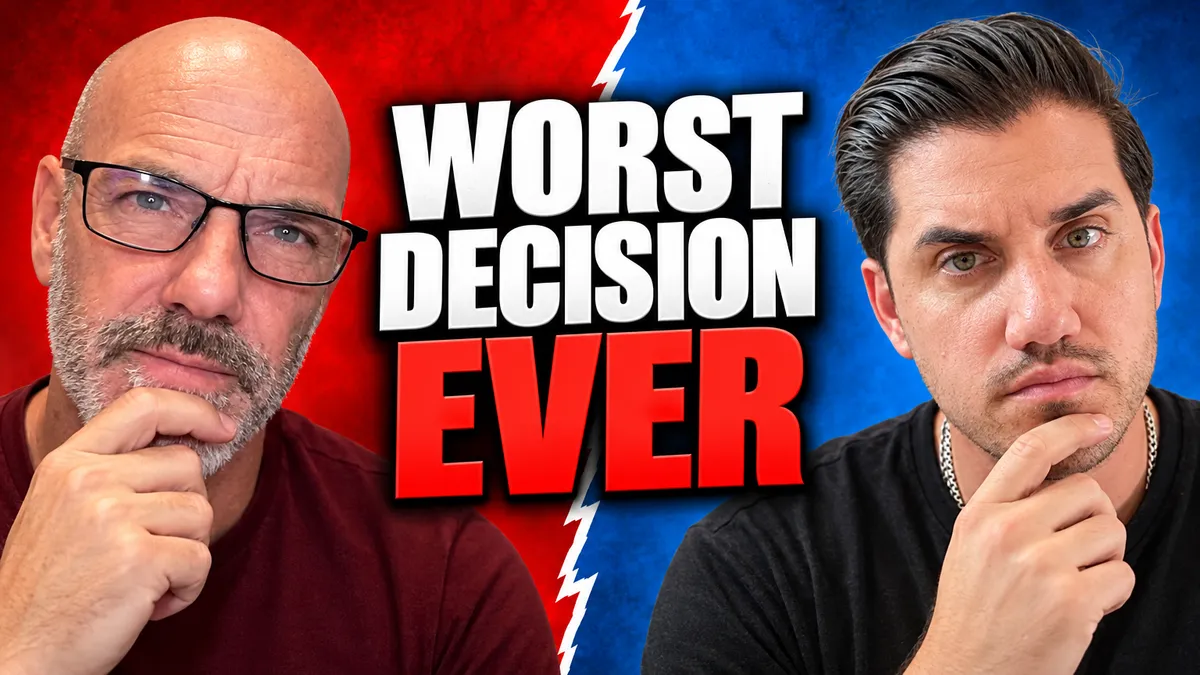
Owner Confessions: The Decisions That Almost Ended Their Restaurants
Greg Provance and Spiro Douvris tried something different on this episode of Ride or Die: instead of walking in with a single topic, they ran a poll asking restaurant owners to anonymously confess the worst decision they ever made in their business. The submissions came back raw, specific, and a little too familiar. What follows is a breakdown of the real confessions they read on air, and what Greg and Spiro think every owner should take from them.
What Really Happens When You Put Family on the Payroll?
The first confession set the tone: "I hired my brother. My brother needed a job, so I made him a manager. He was a good guy, but the staff knew he couldn't be fired. My best bartender quit and told me on the way out it was because of him. I kept him two more years because I didn't want to deal with it at Thanksgiving." Spiro, who grew up in his own family's restaurant, didn't flinch at the premise. "I come from family business," he said. "I was a little bit different where I wanted to earn that respect. But then you had a brother of mine who didn't want to earn that respect and thought he should be top dog just because of his last name. It doesn't go over well." His rule for hiring family: "You need to go the same route that every employee does. You've got to earn that respect, and if you don't hold them accountable to the same rules, you just create chaos." Greg brought it back to his own son, who he hired as a dishwasher and busser at his restaurant. "I said to him, people are gonna think because you're my son that you're gonna get special treatment right out of the gate. So you're gonna have to work harder than everybody else. There's actually more responsibility on your shoulders than anybody else, because otherwise you get a target on your back." Both agreed the fix isn't avoiding family hires altogether, it's refusing to let the relationship quietly change the standard.
What Happens When a Silent Partner Doesn't Stay Silent?
The next submission: "I took $300,000 from an investor who promised he'd stay out of operations. By month four, he was in the restaurant every night, comping his friends, hitting on servers, changing the music. Nothing in our agreement said he couldn't." Spiro's reaction was immediate: "Spirit of the agreement is a word that, if it was a person, I'd probably kill. You need to lay out standards and expectations of each role, what their role is, what they have authority in, what you have authority in, who gets final vote, who gets final say. These things need to be laid out in the contract." Greg's shorthand for the fix was three words: buy-sell agreement. "When you've got a partner and you've got equity tied up in a business, no matter if you're a minority partner, what happens to your partnership if things do go sideways? I have seen people get so screwed out of handshake deals because they didn't have a provision in place for how you handle an exit. If you have to interpret that down the line, it'll cost you more in lawyers' fees than any equity you'll ever get out of the business." Spiro backed it up with a story close to home: his own father brought in a partner on his fourth store for $250,000 in the early 2000s. Within eight weeks, the business's value had climbed enough that the partner wanted to be bought out at the new, inflated price, nearly four times what he'd originally put in, just to make the headache go away. "It's when you talk about an agreed-upon price, buy-sell agreements," Spiro said. "Better believe it."
Why Did Working 90 Days Straight Feel Like a Badge of Honor?
This confession hit the hardest for both hosts: "I never took a day off. I worked 90 days straight when we opened and I was proud of it. Then it became two years. My marriage ended. My kids were in middle school before I realized it. I missed most of elementary. The restaurant is doing fine now. I'm not sure I am." Greg told his own version of that story, about coming home from a ten or twelve-hour shift to find his wife and kids wrapping up dinner without him. "My wife looked at me and said, we don't get invited to anything anymore because you can never be there. I feel like a single mom even when you're here. Because even when I wasn't at the restaurant and I was with the family, I was still 10,000 miles away. I could just never turn it off." Spiro connected the exhaustion to a bigger idea: "You're chained to that grill. You might be physically out of the restaurant, you're not mentally out of it. You're taking that exhaustion and that stress home with you." Greg reframed the whole conversation around energy instead of hours: "What we really need to be focusing on is energy management, not time management. I can spend fifteen hours in a day doing a bunch of stuff and get absolutely nowhere, or I could spend five or six hours crushing it. The difference is how well my energy is being managed." Both were blunt that owners also owe this same attention to their teams, not just themselves: "You need to be conscious of your staff's mental health too," Spiro said, "and what they can handle."
What Goes Wrong When You Promote Your Best Server to Manager?
The final confession Greg and Spiro dug into: "She was the best server I ever had, so I made her front-of-house manager. No training, no leadership coaching, just keys and a raise. She hated it. Her old coworkers resented her, and within eight months I lost her completely. I didn't lose a bad manager, I lost a great server." Spiro called this a tale as old as time: "Being a manager is more than technical, being the best server. It goes back to values and characteristics more than technical skill, because technical skill can always be taught. Can you understand finances? Can you understand labor costs, food costs, guest interaction, customer retention? There's more to it than I'm a great server." Greg pointed out the uncomfortable math of promoting from within: "Are we asking someone who has relationships with their coworkers intact to now hold those same people accountable? They've been partying after work, and now all of a sudden they have to step in and give coaching." Spiro's advice before anyone gets the title: try them out first. "Let them run a shift. Hey, I'm gonna take a step back from this shift, I want you to take a little more control. See how they do. Talk to your staff: if we promoted somebody here, would you listen to them?" And once someone is promoted, Spiro added, give them a real runway. "They're not gonna be perfect overnight. They need time to develop and find their footing as a manager. You've gotta be willing to allow for time to happen."
More from the Rundown: If this episode hit home, go deeper with Your Phone Won't Stop Ringing Because You Never Let Go on the delegation habits that actually prevent burnout, Stop Orientating, Start Integrating on building a real training path before you hand someone a title, and Stop Hiring Bodies, Start Hiring Believers on hiring and promoting for character, not just convenience.
None of these owners set out to make a bad call. Every one of these decisions, hiring the family member, taking the investor's money, grinding through year two, handing over the keys, looked like the right move at the time. The pattern underneath all four is the same: nobody had the hard conversation up front, wrote the expectation down, or built the training and the boundaries before they needed them. That's exactly the kind of clarity Greg works on with owners inside the Leadership Circle, where the conversations about partnership terms, hiring standards, and burnout happen before they turn into a confession. Learn more about Greg's Leadership Circle at https://gphospitalitypartners.com/leadership-circle.
Want more conversations like this one? Subscribe to Ride or Die at https://gphospitalitypartners.com/podcast and never miss an episode.