You're Not Broke, You're Just Bad at Cash Flow
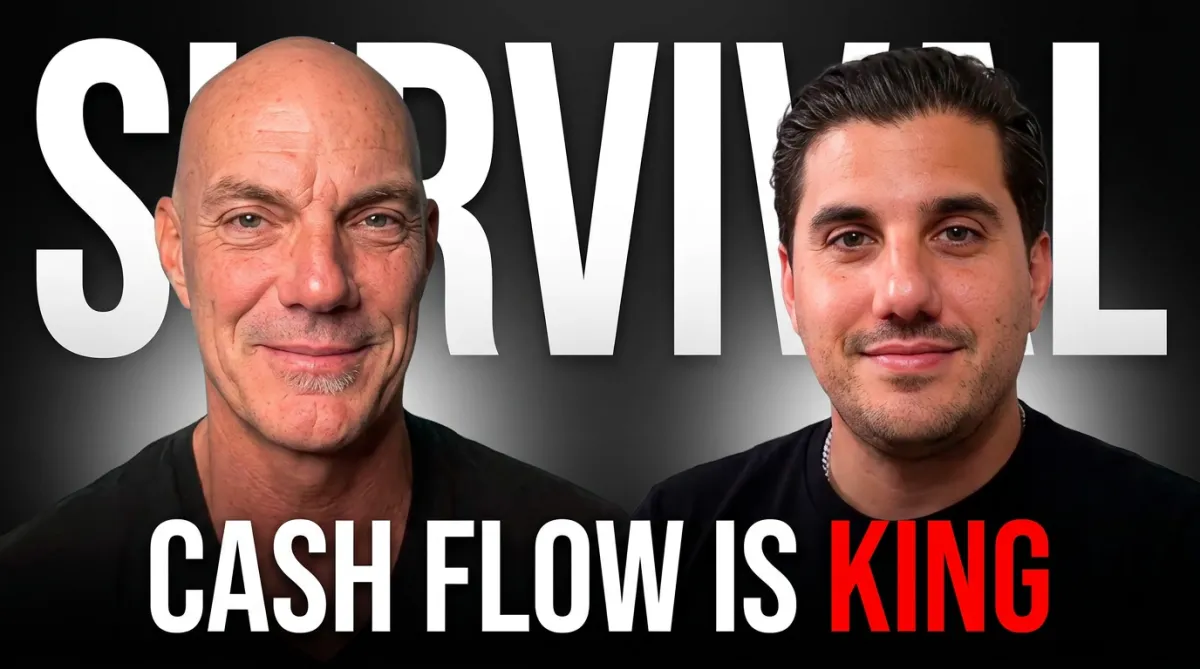
Most restaurant owners can tell you their sales number without blinking. Ask them what their cash flow looks like three weeks from now, and you get silence. On Episode 3 of the Ride or Die Restaurant Show, Greg Provance and Spiro Douvris dig into why cash flow, not the top line, is the number that actually decides whether a restaurant survives.
Cash flow is not profit
Profit is a result. Cash flow is the action, the actual movement of real, liquid money in and out of the business as sales come in and bills go out. A restaurant can show a profit on paper and still not have enough cash sitting in the account to make payroll, because profit doesn't account for timing. Confusing the two is one of the most common and most expensive mistakes operators make.
Why cash flow matters more than almost anything else
Ahead of this episode, Spiro asked two contacts in private equity in New York, people who evaluate businesses professionally, how much weight cash flow carries in an acquisition decision. One said an eight out of ten. The other said simply, cash flow is king. That's not restaurant-specific advice. It's how serious money evaluates any business, and most restaurant owners aren't applying that same lens to their own operation.
The paycheck-to-paycheck cycle
Here's the pattern that shows up constantly: sales from the 1st through the 15th cover payroll and vendor bills due on the 15th, then sales from the 16th through the 30th cover the bills due on the 1st. It's a cycle of working just to cover what's already owed, with nothing left to build a cushion. It's exhausting, and it's far more common than most operators want to admit out loud.
The multi-location trap
Adding a second location often triggers the same problem at a bigger scale. The new location doesn't get its own adequate cash reserve, runs into a cash crunch, and the original location ends up propping it up. More locations doesn't mean the cash flow problem goes away. It just means you can have it in five places instead of one.
Stop reacting: price hikes and quality cuts aren't a strategy
When cash gets tight, the reflex is to raise prices, cut quality, or both. Cutting quality is the more dangerous move: it erodes the exact thing that brought customers in the first place, and it pushes people away faster than a price increase ever would. There's a real difference between trimming fat and cutting your nose off to spite your face. Chasing the $200 line item in a service subscription won't fix a cash flow problem. Food and labor are typically 50 to 60% of total expenses. That's where the real percentage points live.
Build a predictive system, even without software
The fix is moving from reactive to proactive: a rolling weekly cash flow projection instead of a monthly P&L that only tells you what already happened. A bookkeeping service that reports projected sales, upcoming expenses, and scheduled promos or events a week out turns budgeting from guesswork into a plan. No bookkeeping service on retainer yet? Pull the last three to four weeks of sales and expenses by hand. Calculate the real food cost and labor percentages. Most operators are surprised: what they assumed was a 30% food cost is often closer to 37%, what they thought was 25% labor is often 32%. That gap is where the money is disappearing.
Turn budgets into teachable moments, not micromanagement
Once you know the real numbers, give your team a budget to work within instead of letting them order or schedule off instinct. When a manager overspends or over-orders, the move isn't to blame them, it's to walk them through the math: this extra case cost you this much, here's what that money could have covered instead. That builds better decision-making over time instead of just producing resentment.
Don't undercapitalize your next location
Opening a new unit without enough working capital to cover six to twelve months of costs is one of the most preventable ways to fail. Underestimate what you actually need, and you're betting the business on nothing going wrong in the first year. That bet doesn't always pay off.
The one thing to do today
Asked what single move would help most right now, Spiro pointed to food cost first: audit portions and waste, since a few extra ounces on every plate adds up fast. Greg pointed one step earlier: get a real weekly cash flow projection in place first, because until you can see the picture clearly, you don't know which lever is actually worth pulling.
Quick Takeaways
- Cash flow and profit are different: profit is a result, cash flow is the actual movement of money in and out of your business.
- Food and labor typically make up 50 to 60% of expenses, making them the highest-leverage place to find real savings.
- A weekly rolling cash flow projection lets you plan ahead instead of reacting to what a monthly P&L already shows happened.
- Without bookkeeping software, calculating real food cost and labor percentages from the last 3 to 4 weeks by hand often reveals costs higher than assumed.
- New locations should be capitalized with 6 to 12 months of working capital, not the bare minimum to open the doors.
FAQ
What's the difference between cash flow and profit in a restaurant?
Profit is an accounting result showing revenue minus expenses over a period. Cash flow is the actual real-time movement of liquid cash in and out of the business, which is why a restaurant can be profitable on paper and still struggle to make payroll.
How can a restaurant improve cash flow without hiring a CPA?
Pull the last 3 to 4 weeks of sales and expenses and calculate actual food cost and labor percentages by hand. Comparing those real numbers to what you assumed you were running often reveals where cash is leaking.
What is the Profit First method for restaurants?
A budgeting approach where a fixed percentage of revenue is set aside as profit first, before other expenses are paid, rather than treating profit as whatever happens to be left over at the end.
More from the Rundown: for more on the financial side of running a restaurant, see Surcharges: Smart Business or Ripping Off Your Customers?, Cut Your Menu 30% or Keep Bleeding Money, and Third-Party Delivery Isn't Killing Your Restaurant. Your Mindset Is.
Getting a real weekly cash flow projection in place, instead of flying blind off a monthly P&L, is exactly the kind of financial clarity we build into the Leadership Circle. If this conversation resonated, learn more about the Leadership Circle here.
Want more conversations like this one? Subscribe to the Ride or Die Restaurant Show and catch every episode at gphospitalitypartners.com/podcast.