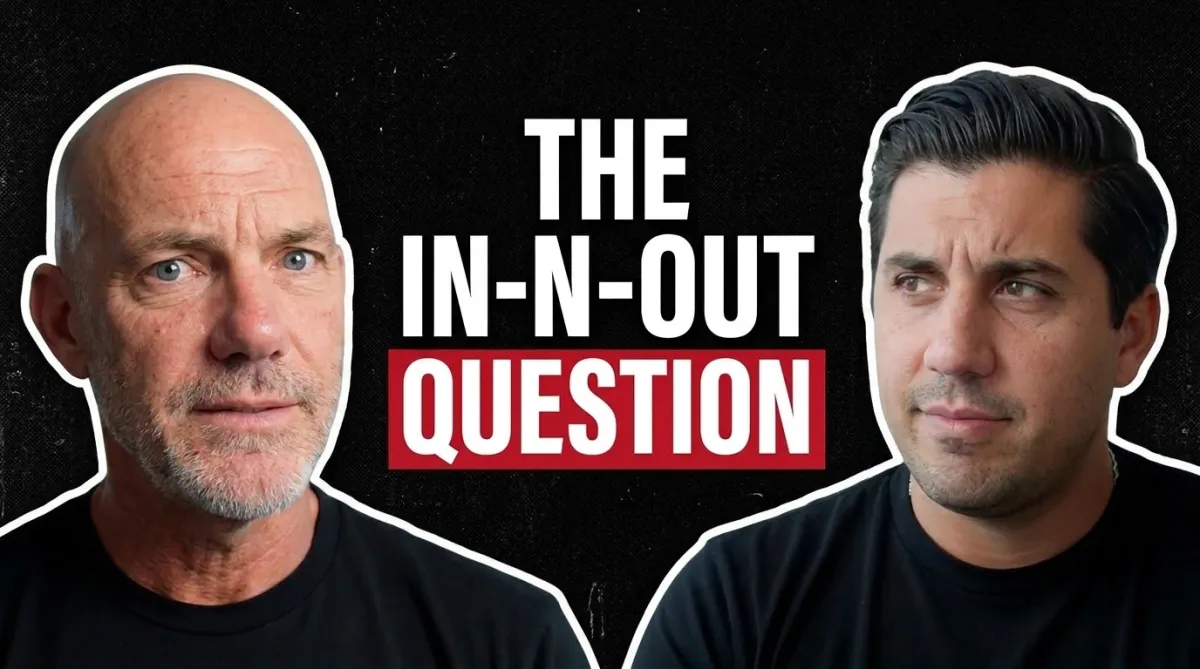
Stop Blaming Minimum Wage. Your Business Model Is the Problem
Minimum wage keeps climbing, and the instinct in this industry is almost always the same: cut hours, cut people, automate what you can. On Episode 2 of the Ride or Die Restaurant Show, Greg Provance and Spiro Douvris make the case that complaining about rising labor costs isn't a strategy, and neither is cutting your way to profitability. There's a better move, and it starts with how you think about the people you already have.
Why cutting labor is the default, and the trap
When costs rise, the reflex is to cut. Bigger chains lean into automation: kiosks, AI-driven review responses, phone systems that route around a human entirely. That works, to a point. Kiosk ordering alone tends to drive meaningfully higher average tickets. But push automation too far and you lose the touch points that actually build a customer relationship, the conversation that tells you what a guest is really unhappy about, the server interaction that turns a one-time visitor into a regular. Independent operators usually don't have the capital for heavy automation anyway, and many don't want to trade away the personal feel that makes them different from a chain.
The real cost of over-automating
Full-service concepts are already testing this line: QR codes on tables, self-service ordering, fewer servers per section. Some of it is smart when done with intention. Some of it quietly answers a question guests didn't ask, did I come here for a great experience with a server, or did I come here to order for myself like I would at a counter? The two aren't the same guest promise, and mixing them up costs more than it saves.
What sales per labor hour actually measures
Instead of just cutting hours, track what those hours are producing. Sales per labor hour takes total sales in a period and measures it against the hours worked to produce it, by shift, by station, by whole day. Push that number up 10 to 20% through better training and better systems, and it hits your bottom line harder than trimming a shift ever will. The catch: it has to be paired with an eye test. A burger station naturally rings more than a salad station in the same five hours. That's not a productivity problem, that's volume. What matters is whether that salad cook is jumping in to bag orders, cross-train, or help the line when things are slow, or just standing there.
Hire the one-and-a-halves
Greg's framing: find the people who do about one and a half of what a normal team member does, not because they're superhuman, but because they're focused and well-trained. Get a team full of those people and the extra few dollars an hour minimum wage adds becomes close to irrelevant, because you need fewer hours to produce the same result, and you can redirect the savings straight back into the team instead of losing it to turnover and retraining.
Task-takers vs. multipliers: the leadership gap
Here's where the real gap sits. Most restaurant brands have zero training system for anyone above a shift manager. People get promoted because they were excellent at the job they were doing, server to assistant manager to GM, without ever being taught how to lead, how to read a P&L, or how to develop the people under them. Greg's own first GM role handed him an eight-million-dollar flagship store with zero training on how to read the numbers running it. That gap turns leaders into task-takers, people who jump in and do the work themselves instead of building a team that can do it without them. A task-taker in a leadership seat is an expensive way to still be understaffed.
The In-N-Out chicken-and-egg
In-N-Out pays well above minimum wage and does the volume to support it. Which came first? The hosts land on investment: the pay came before the payoff, built over years into a flywheel where better pay drives better consistency, which drives loyalty, which drives the volume that makes the higher pay sustainable. It's not proof that paying more instantly fixes anything. It's proof that the return shows up over time, not on today's shift report.
Bottom line
Grow the people, grow the business. Minimum wage stops being an existential threat once you have a real strategy for developing the humans running your restaurant, tracking their actual productivity, and building leaders instead of promoting your best server into a job nobody trained them for.
Quick Takeaways
- Cutting labor hours without measuring productivity often costs more in lost guest experience than it saves in payroll.
- Track sales per labor hour by shift and station, paired with an eye test, not raw hours cut, to find real efficiency gains.
- Hiring and developing highly productive team members reduces the effective impact of minimum wage increases on your labor cost.
- Most restaurant brands have no leadership training system above shift manager, which creates task-takers instead of multipliers.
- Paying above minimum wage can build long-term loyalty and volume, but the return compounds over time rather than showing up immediately.
FAQ
How do restaurants deal with rising minimum wage without cutting staff?
By focusing on productivity per labor hour instead of headcount alone, developing fewer, better-trained team members, and investing in leadership training so managers can build efficient teams rather than just cutting shifts.
What is sales per labor hour in a restaurant?
It's a productivity metric that measures total sales generated against the hours worked to produce them, broken down by shift or station, used to identify where labor is being used efficiently versus where it isn't.
Does paying restaurant staff more actually pay off?
According to the hosts, yes over time. Higher pay tied to strong training and productivity tends to build consistency and guest loyalty that increases volume, though the return builds gradually rather than appearing immediately on a P&L.
More from the Rundown: for more on the financial and leadership side of running a restaurant, see Surcharges: Smart Business or Ripping Off Your Customers?, Cut Your Menu 30% or Keep Bleeding Money, and You're Hiring to Fill a Shift, Not Build a Company.
Turning task-takers into multipliers and building a team of "one-and-a-halves" is exactly the kind of leadership development we build inside the Leadership Circle. If this conversation resonated, learn more about the Leadership Circle here.
Want more conversations like this one? Subscribe to the Ride or Die Restaurant Show and catch every episode at gphospitalitypartners.com/podcast.